
Table of Contents
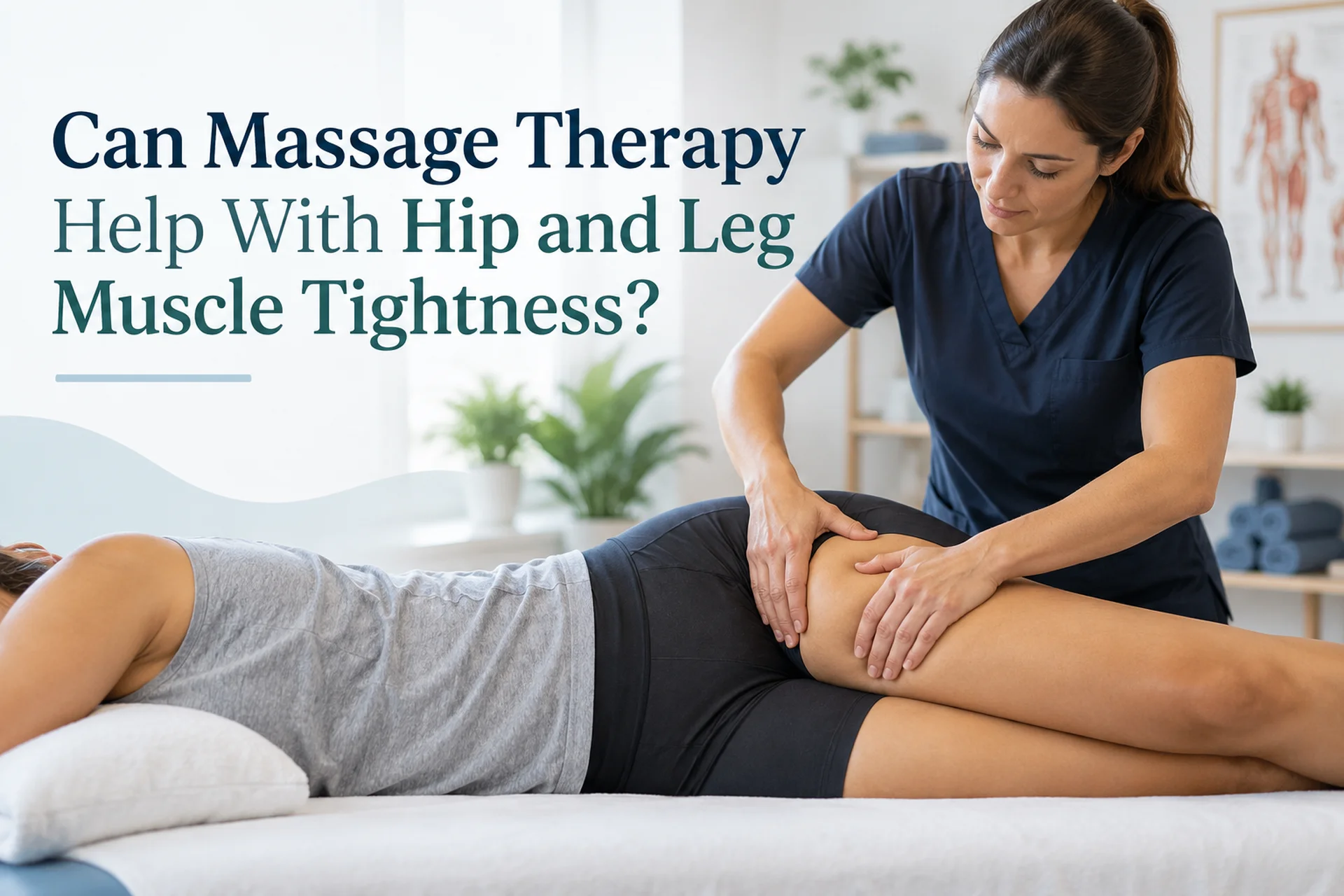
Hip and leg muscle tightness can make everyday movements uncomfortable. You may notice stiffness after long periods of sitting, discomfort while walking, or reduced flexibility during exercise. For people searching for Massage Therapy in Edmonton, massage can help manage muscle tension when combined with appropriate physiotherapy and movement.
The right approach depends on which muscles are tight, what is causing the tension and whether an underlying joint, tendon or movement issue is involved.
What Causes Tightness in the Hips and Legs?
The muscles around the hips and legs work together during walking, running, climbing stairs and exercise. Prolonged sitting, repetitive movements, sudden increases in activity and poor movement patterns can contribute to muscle tension. Massage therapy for muscle tension may help ease tightness and support comfortable movement.
Common areas that may become tight include:
- Hip flexors and gluteal muscles
- Hamstrings and quadriceps
- Adductors or inner-thigh muscles
- Calf muscles
- Muscles around the outer hip and thigh
Tightness can also result from strains, tendon or joint issues. Muscle tightness massage may ease muscular tension, but you should have persistent symptoms assessed.
I sit for long hours and often feel tight around my hips. Could this be contributing to the problem?
Yes. Prolonged sitting can contribute to hip and leg muscle tension. We can assess your movement and identify contributing factors before recommending appropriate hands-on treatment or exercises.
How Can Massage Help Tight Hip and Leg Muscles?
Massage Therapy works on the soft tissues around the hips and legs using different levels of pressure and movement. The goal may be to reduce muscular tension, improve comfort and support mobility.
Someone who sits for several hours each day may have tension around the hip flexors and glutes, while an athlete may experience tightness in muscles repeatedly used during training.
Massage therapy for tight hips and legs can be particularly useful when combined with exercises and other physiotherapy techniques rather than being used as the only form of treatment.
Techniques That May Be Used
Depending on your symptoms and assessment, physiotherapy treatment may include several techniques.
- Deep tissue techniques: Slow, sustained pressure may be applied to deeper muscle layers affected by stiffness or tension. Deeper pressure isn’t necessarily better and should be adjusted to your comfort.
- Myofascial release: Sustained pressure can be used around areas where soft-tissue movement feels restricted, including the hips, thighs and surrounding muscles.
- Trigger point techniques: Apply focused pressure to particularly tight or sensitive areas within a muscle.
- Petrissage and kneading: Kneading movements can help warm and mobilize larger muscle groups such as the glutes and thighs.
- Gliding strokes: Lighter strokes may prepare the tissues for more focused treatment.
- Manual therapy: A physiotherapist may combine soft-tissue work with appropriate joint mobilization when stiffness involves more than the muscles alone.
- Stretching and mobility exercises: Targeted exercises can complement massage by working on flexibility and movement.
- Strengthening exercises: If weakness or poor muscle control contributes to recurring tightness, strengthening may be included to support longer-term improvement.
Will massage help if my muscles feel tight after work or exercise?
Massage may help reduce muscular tension and improve comfort. We can select suitable techniques based on your symptoms and combine them with mobility or strengthening exercises when appropriate.
Is Hip Massage Therapy Different From Leg Massage Therapy?
The treatment area and reason for tightness influence the approach.
Hip massage therapy in Edmonton patients seek may focus on the glutes, hip flexors, rotators and surrounding tissues. This may be relevant if stiffness occurs with sitting, walking, squatting or changing position.
With Leg massage therapy in Edmonton, treatment may focus on the quadriceps, hamstrings, adductors or calves. This can be relevant for people experiencing tightness after running, cycling, strength training or other activities.
Because the hip and leg muscles work together, treatment should consider the entire movement pattern rather than focusing only on the area where you feel discomfort.
I feel tightness in both my hips and thighs. Should both areas be treated?
They may need to be addressed together because hip and leg muscles work closely during movement. We assess the affected areas and tailor treatment to your specific needs.
Can Massage Help With Tight Hips and Legs After Exercise?
Exercise can temporarily increase muscle soreness and stiffness, particularly after trying a new activity, increasing training volume or completing a demanding workout.
Sports massage Edmonton services may help active individuals with recurring muscle tightness related to their training or sport. Treatment can focus on muscle groups that are repeatedly loaded.
However, persistent pain should not be assumed to be normal post-workout tightness. Determining whether symptoms are related to muscle tension, decreased mobility, an injury, or another underlying problem can be facilitated by a physiotherapy evaluation.
Why do my hips and legs feel stiff after increasing my workout routine?
A sudden increase in activity can place additional load on muscles and cause temporary stiffness. We can assess your symptoms and recommend suitable recovery, mobility and strengthening strategies.
What Should You Expect During Treatment?
At Vertex Physiotherapy, treatment can begin with an assessment of your symptoms, movement and areas of tightness. This helps determine whether hands-on treatment is appropriate and which areas should be addressed.
During Massage Therapy, we can adjust pressure to your comfort and the condition of your tissues. Some people respond well to lighter techniques, while others may benefit from more focused treatment.
Treatment may also include mobility, stretching or strengthening exercises to address factors that could contribute to recurring tightness.
For Edmonton residents, this approach can support people whose stiffness affects everyday activities, exercise or recreational sports.
Will the massage pressure be adjusted if an area feels too sensitive?
Absolutely. We adjust pressure and techniques according to your comfort, symptoms and assessment findings. Treatment may also include stretching, mobility work or strengthening exercises when appropriate.
When Should You Seek Physiotherapy?
Self-massage may help with occasional muscle tightness, but consider a professional assessment if symptoms persist or keep returning.
Consider physiotherapy if you experience:
- Persistent hip or leg discomfort
- Restricted movement that does not improve
- Tightness following an injury
- Recurring tension during exercise
- Difficulty walking, running or climbing stairs
- Weakness, numbness or tingling
- Symptoms that continue despite rest
Approach massage cautiously with certain medical conditions. Deep massage may not suit everyone, so discuss relevant concerns with your healthcare provider or physiotherapist.
How do I know if my recurring muscle tightness needs professional assessment?
Consider an assessment if tightness persists, repeatedly returns, limits movement or follows an injury. We can evaluate possible contributing factors and recommend an appropriate treatment plan.
Can Massage Therapy Be Part of a Physiotherapy Plan?
Yes. Massage Therapy can be one component of a broader physiotherapy programme. Hands-on treatment may help reduce muscle tension and improve short-term comfort, while exercises can address strength, flexibility and movement control.
At Vertex Physiotherapy, the combination of techniques depends on your symptoms and assessment. The aim is not simply to make tight muscles feel temporarily looser, but to support comfortable movement and help you return to your usual activities.
Can I combine massage with exercises instead of relying on massage alone?
Yes. We may combine hands-on treatment with targeted exercises to address flexibility, strength and movement control, supporting both immediate comfort and longer-term management of recurring muscle tightness.
Ease Hip and Leg Muscle Tightness With the Right Care
Hip and leg tightness can develop from prolonged sitting, repetitive activity, exercise or movement limitations. When combined with stretching, strengthening, and physical therapy, massage therapy can help ease tense muscles, enhance comfort, and promote mobility.
If persistent tightness affects daily activities, exercise or sports, Massage Therapy in Edmonton at Vertex Physiotherapy can be part of an individualized approach. Contact Vertex Physiotherapy to discuss your symptoms and suitable treatment options.
Meet the Therapist
Tariha Aquib provides personalized massage therapy focused on easing muscle tension, supporting mobility and improving comfort. Her approach considers each client’s concerns and treatment needs, helping them work toward more comfortable movement and everyday function.
Frequently Asked Questions
Yes. We can work on muscles affected by prolonged sitting and combine massage with mobility exercises to help improve hip movement and reduce recurring tension.
Yes. Massage may help reduce tension in tight hamstrings. We can also assess flexibility and movement patterns to determine whether to include stretching or strengthening.
Yes. Massage can complement regular exercise by addressing muscle tension and supporting recovery. We can tailor treatment according to your activity level, training demands and specific areas of tightness.
They can. Restricted calf flexibility may influence ankle movement and walking mechanics. We can assess your lower-limb movement and determine whether massage, mobility work or strengthening may help.
Yes. Long periods of sitting during travel can contribute to hip and leg stiffness. Massage may help ease muscle tension, while gentle movement and stretching can support mobility.
The appropriate timing depends on your symptoms and treatment goals. We may recommend gentle mobility or stretching after treatment, when it suits your condition.
Yes. Uneven muscle tension can have several causes. We can assess both sides, compare movement and determine whether massage or other physiotherapy techniques are appropriate for you.
There is no standard frequency for everyone. We consider your symptoms, activity level and response to treatment before recommending a schedule that fits your individual needs.
Massage may support flexibility by reducing muscle tension, particularly when combined with appropriate stretching and mobility exercises. We can recommend techniques based on your movement limitations.
Mild temporary soreness can occur after some massage techniques, particularly deeper work. We adjust treatment intensity according to your response and discuss any unexpected or persistent discomfort with you.