
Table of Contents
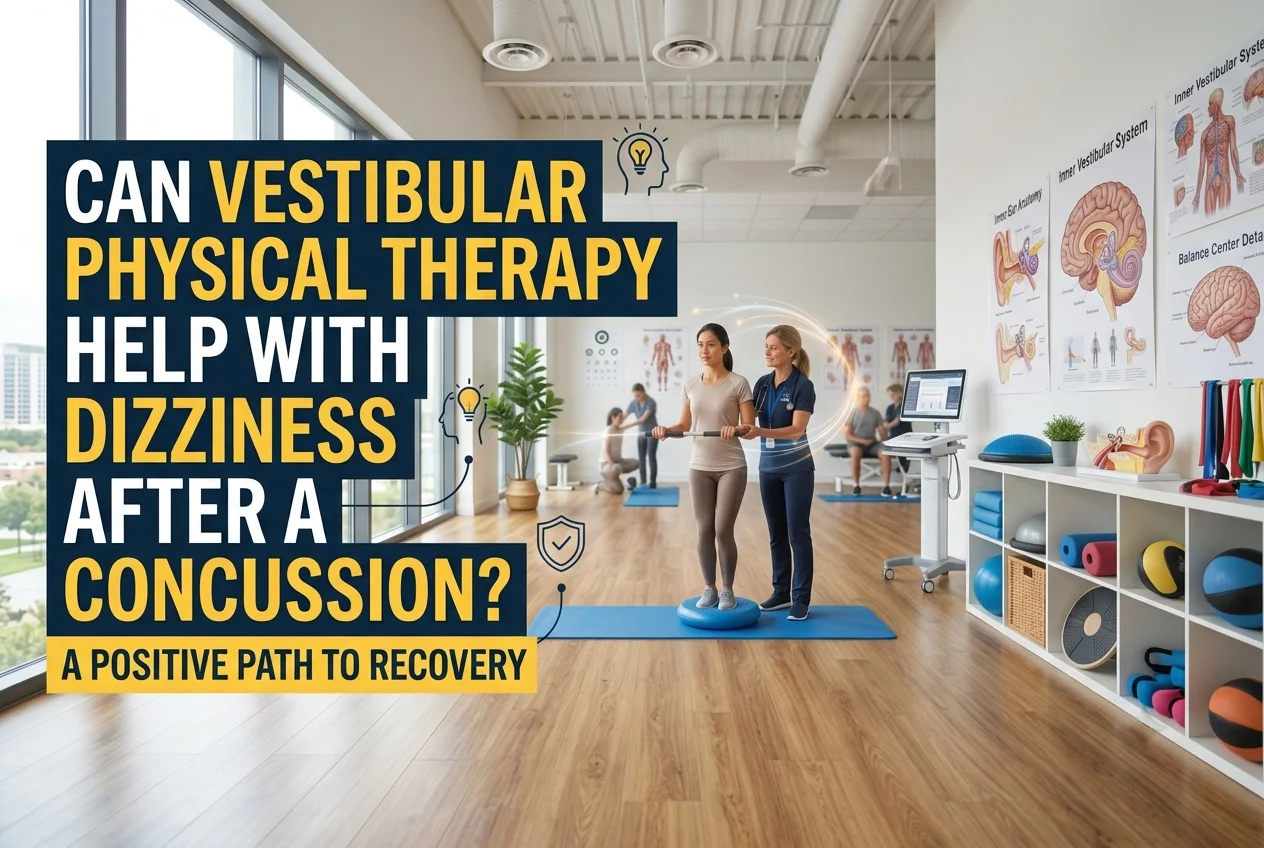
Dizziness after a concussion can make everyday activities surprisingly difficult. Turning your head, walking through a busy store, using a screen, getting out of bed or moving quickly may trigger dizziness, imbalance or a sensation that your surroundings are moving. Vestibular Physiotherapy in Edmonton can help identify the factors contributing to these symptoms and provide a gradual rehabilitation plan.
Post-concussion dizziness can have different causes. It may involve the inner-ear balance system, eye-head coordination, balance control, the neck or the brain’s processing of movement and visual information. This makes an individual assessment important before selecting Dizziness Treatment Physiotherapy.
Why Does a Concussion Cause Dizziness?
The vestibular system helps your eyes, inner ears, brain, muscles and joints work together to maintain balance and understand body position. Vestibular therapy for post-concussion symptoms can address changes in how these systems process movement and visual information after a concussion.
You may experience:
- Dizziness when moving your head
- Blurred or bouncing vision during movement
- Difficulty maintaining balance
- Sensitivity to busy visual environments
- Nausea or motion sensitivity
- Dizziness when bending or changing position
- Difficulty tolerating screens or scrolling
A concussion can also trigger benign paroxysmal positional vertigo (BPPV), which may cause brief episodes of spinning when the head moves into certain positions. Dizziness Relief Vestibular Physiotherapy can help address these symptoms following head trauma.
Why do I feel dizzy even though my concussion happened weeks ago?
Dizziness can persist when a concussion affects balance, eye movement, inner-ear function or movement processing. Our physiotherapists can assess these factors and identify appropriate rehabilitation strategies.
How Can Vestibular Physical Therapy Help After a Concussion?
Vestibular Physical Therapy is based on the specific movement, visual and balance problems identified during an assessment. Treatment is not necessarily the same for everyone and can be adjusted based on symptoms, tolerance, and functional goals.
1. Gaze Stabilization Exercises
Gaze stabilization exercises help the eyes and brain maintain a clear visual target while the head moves. These exercises often target the vestibulo-ocular reflex (VOR), which helps keep vision stable during movement.
You may begin by focusing on a stationary target while making controlled head movements. You can gradually increase the difficulty as your tolerance improves.
2. Habituation Exercises
If certain movements repeatedly trigger dizziness, carefully selected habituation exercises may help your nervous system become more accustomed to those movements.
You may gradually introduce head movements, position changes, and other controlled activities. The goal is to challenge the system without unnecessarily aggravating symptoms.
3. Balance and Walking Exercises
Concussion-related dizziness may affect balance, particularly when visual information is reduced, or the environment is busy. Exercises can include different standing positions, changes in support surfaces, head movements and walking activities.
As balance improves, exercises may progress to walking with head turns, changing direction or combining movement with visual tasks.
4. Visual Motion Exercises
Some people experience dizziness in supermarkets, shopping centres, traffic or other visually busy environments. This can be associated with visual motion sensitivity.
Treatment may gradually expose you to controlled visual movement. Exercises can include tracking objects, coordinated eye and head movements, and carefully selected visual stimuli.
5. Canalith Repositioning for BPPV
When assessment confirms BPPV, specific repositioning manoeuvres may be appropriate. Depending on the affected canal, techniques may include the Epley, Semont, Lempert/BBQ roll or Gufoni manoeuvre.
These techniques differ from general vestibular exercises and should be selected based on assessment findings.
6. Cervical Physiotherapy
The neck may contribute to dizziness and movement-related symptoms following an injury. When a cervical component is identified, treatment may include gentle mobility exercises, postural retraining, strengthening and manual therapy.
Addressing neck-related impairments alongside vestibular symptoms can form part of a broader rehabilitation plan.
7. Graded Aerobic Exercise
A gradual return to physical activity may also be included when appropriate. A physiotherapist can help establish a symptom-limited exercise routine and progressively increase activity based on your tolerance.
The goal is to build activity gradually rather than returning to demanding exercise too quickly.
Why do certain head movements make my dizziness worse after a concussion?
Head movements can challenge the vestibular and visual systems after a concussion. Our treatment may use targeted exercises to gradually improve coordination, balance and tolerance to movement.
What Happens During Vestibular Rehabilitation?
A Vestibular Physical Therapy appointment typically begins with questions about when and how your dizziness occurs. Your physiotherapist may assess eye movements, head-and-eye coordination, balance, walking, positional responses, and movement tolerance.
This assessment helps determine which systems may be contributing to your symptoms and which techniques are appropriate. Someone experiencing positional spinning may need a different approach from someone with visual motion sensitivity or difficulty walking with head movement.
Effective Vestibular Physiotherapy for Dizziness Relief may combine therapeutic exercises, manual techniques and a home program that can be adjusted as your symptoms change.
Will you check what triggers my dizziness during my physiotherapy assessment?
Yes. We assess your eye movements, balance, walking, head movement, positional responses and symptom triggers to develop a rehabilitation plan suited to your specific presentation.
When Should You Consider Vestibular Physiotherapy in Edmonton?
If dizziness continues after a concussion and affects work, school, exercise, driving or daily activities, an assessment may be worthwhile.
Vestibular Physiotherapy in Edmonton may be particularly useful if you experience dizziness with head movement, imbalance, positional vertigo, visual motion sensitivity or difficulty returning to normal physical activity.
At Vertex Physiotherapy, we tailor our approach to the symptoms and functional challenges identified during your assessment. The focus is on progressing through appropriate rehabilitation rather than simply avoiding movements that cause dizziness.
How long should I wait before seeking physiotherapy for ongoing dizziness?
You do not necessarily need to wait for symptoms to resolve on their own. An assessment can help determine contributing factors and appropriate treatment when dizziness affects daily activities.
Can Vestibular Therapy Completely Eliminate Post-Concussion Dizziness?
Recovery varies depending on the cause of dizziness, how long symptoms have been present and whether other concussion-related concerns are involved. Vestibular Physical Therapy can address vestibular, balance and movement-related impairments, but persistent dizziness does not always have a single cause.
Some people may also experience headaches, vision problems, neck symptoms, sleep difficulties or other concerns that require additional healthcare support.
The first step is understanding what may be contributing to your symptoms. Vestibular Physical Therapy may then include gaze stabilization, habituation, balance training, visual motion exercises, repositioning manoeuvres, cervical treatment and graded activity as appropriate.
Could my dizziness have another cause besides the concussion?
Yes. Dizziness may involve vestibular, visual, cervical or other factors. Our assessment helps identify potential contributors and determine whether physiotherapy is appropriate for your symptoms and recovery.
Support for Your Post-Concussion Recovery
Dizziness after a concussion can affect how comfortably you walk, work, exercise, use screens and manage everyday activities. With an individualized assessment and progressive treatment plan, vestibular rehabilitation can address factors contributing to these difficulties.
If you are looking for Vestibular Physiotherapy in Edmonton, Vertex Physiotherapy can assess your symptoms and develop an approach based on your individual needs. Contact our team to discuss your dizziness and determine whether physiotherapy may be appropriate for your recovery.
Meet Your Physiotherapist
Radha Durai Babu is a Registered Physical Therapist at Vertex Physiotherapy. She works with patients to understand their concerns, develop individualized rehabilitation plans, and support progress toward improved movement, balance, function and everyday activity.
Frequently Asked Questions
Yes. Dizziness, blurred vision, delayed reactions or difficulty processing movement can make driving challenging. We recommend discussing your symptoms with an appropriate healthcare professional before returning to driving.
Busy environments contain constant visual movement, changing patterns and multiple distractions. After a concussion, your brain may have difficulty processing this information, which can increase dizziness, disorientation or imbalance.
Yes. Scrolling, rapid visual movement, prolonged screen use and focusing on small text may aggravate dizziness or visual symptoms. We can help identify your triggers and gradually build tolerance to these activities.
Dizziness triggered by rolling over, lying down or getting up may sometimes be associated with BPPV. An assessment can determine whether positional changes are contributing to your symptoms and whether repositioning treatment is appropriate.
Some exercises may briefly reproduce mild symptoms because they challenge the affected system. We carefully select and progress exercises based on your tolerance, rather than encouraging you to push through significant symptoms.
The frequency varies based on your symptoms, assessment findings, recovery progress, and treatment goals. We can recommend an appropriate schedule after evaluating how your dizziness affects movement and daily activities.
Exercise may be appropriate when introduced gradually and according to your symptoms and tolerance. We can help determine suitable activity levels and progress exercises as your ability to tolerate physical activity improves.
Walking while turning your head requires coordination between your eyes, vestibular system and balance responses. After a concussion, this coordination may be affected, making combined movements feel difficult or uncomfortable.
When nausea is linked to vestibular dysfunction or motion sensitivity, appropriate rehabilitation may improve tolerance to movement. We first assess the likely contributors before selecting exercises or other treatment techniques.
Improvement may include fewer dizziness episodes, better balance, greater tolerance for head movement, improved comfort in visually busy environments and easier performance of everyday activities. We can monitor these changes throughout rehabilitation.